How Many Calories in an Egg: Macro Table
Published 2026-08-18 · 4 min read
The egg is one of the most common foods in any diet: breakfast, a snack, the base of an omelette or a salad, a cheap source of protein. But calories here get confused for two reasons — people count "per 100 grams" even though one egg weighs about 50–60 grams, and they ignore that frying in oil noticeably raises the total. Let's go over the ballpark figures and a macro table.
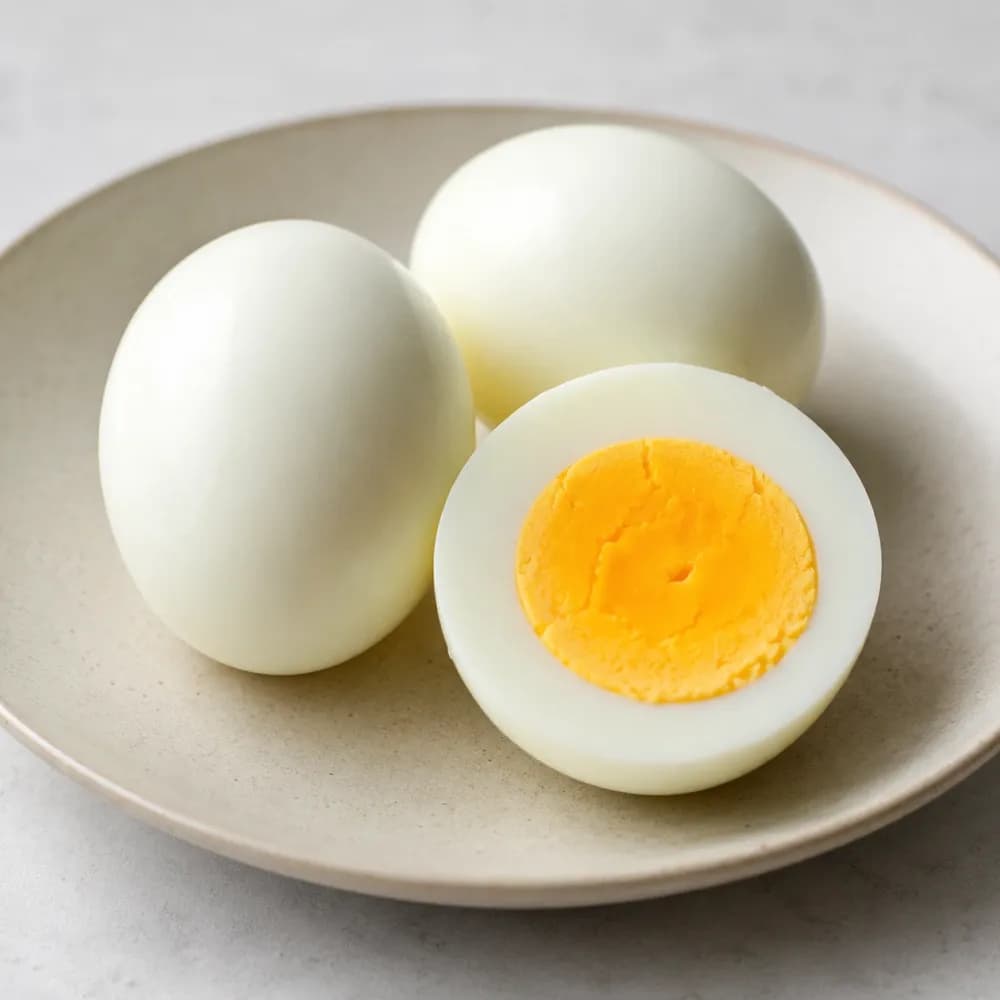
How many calories in one egg and per 100 grams
One medium chicken egg (about 55 grams) is roughly 70–80 kcal without oil. Larger or smaller eggs weigh more or less, so they carry a bit more or fewer calories — but a single egg usually lands in the 65–90 kcal range.
Per 100 grams of whole egg that comes to about 143–157 kcal (ballpark 150). Importantly, boiling barely changes the calories: a soft- or hard-boiled egg is close to a raw one because nothing is added. Frying in oil, or an omelette with cream and cheese, raises the figure noticeably — thanks to the added fat, not the egg itself.
Egg macro table (approximate)
Approximate values per 100 grams. Note how differently the white and the yolk count:
- whole egg (raw or boiled): ≈150 kcal, protein ≈12.7 g, fat ≈11 g, carbs ≈0.7 g;
- egg white: ≈48 kcal, protein ≈11 g, fat ≈0 g, carbs ≈0.7 g — almost pure protein;
- egg yolk: ≈320–350 kcal, protein ≈16 g, fat ≈30 g — all the egg's fat lives here;
- fried egg (in oil): ≈190–240 kcal because of the oil in the pan;
- omelette (with milk, butter, sometimes cheese): ≈180–230 kcal depending on the add-ins.
What the calorie count depends on
The egg itself is predictable, but the number on your plate drifts, and here's why:
- egg size — a small egg (≈45 g) and a large one (≈65–75 g) differ by nearly one and a half times in weight, and so in calories;
- cooking method — boiling and poaching add nothing, frying in oil adds 40–90 kcal per serving;
- white or whole egg — drop the yolk and the calories fall several times over while the protein stays: a common cutting trick;
- omelette add-ins — milk, cream, cheese, sausage and butter easily double the dish's calories;
- quantity — "a couple of eggs for breakfast" easily turns into three, and that's already +70–80 kcal.
Why the egg is handy for tracking
The egg is a cheap, complete source of protein: it has every essential amino acid, it fills you up well and portions neatly (one egg is an obvious unit). For anyone counting calories it's predictable: if you don't fry it in oil, the number barely changes with the cooking method.
To keep breakfast light, boil the eggs or cook them in a dry pan, add oil and cheese sparingly, and when cutting you can swap some whole eggs for whites. The yolk isn't "bad" — it holds the vitamins and healthy fats; it just carries most of the calories, which is worth remembering when you count.
How to count your exact serving
Since egg size, cooking method and add-ins differ for everyone, the most accurate figures come from your actual plate. Photograph the dish in Calvero: the service estimates calories and macros from the shot, and if the preparation is different, correct it with text ("fried in oil", "omelette with cheese", "whites only", "three eggs") and the count recalculates.
You can track in the browser or right inside Telegram. There's a free trial with several analyses — no card required.
Frequently asked questions
How many calories are in one boiled egg?
One medium boiled egg (50–60 g) has about 70–80 kcal. Boiling adds no calories — the figure is the same as for a raw egg. Most of the energy is in the yolk; the white is almost calorie-free.
How many calories are in a fried egg?
The egg itself is around 70–80 kcal, but frying in oil raises the total noticeably: a teaspoon of oil adds roughly 40 kcal. All told, one fried egg is usually 110–130 kcal.
How much protein is in one egg?
A medium egg has about 6–7 g of protein, split roughly evenly between the white and the yolk. With few calories, that makes eggs one of the handiest protein sources for breakfast or a snack.
Is an egg protein or fat?
Both: an egg has about 6 g of protein and 5 g of fat. The white is almost pure protein with no fat, while the fat and cholesterol are concentrated in the yolk.
This content is for informational purposes only and is not medical or dietetic advice. Consult a doctor or a registered dietitian before changing your diet.