How many calories are in plov (pilaf): a macro table
Published 2026-07-18 · 4 min read
Plov (pilaf) is a hearty dish of rice, meat and oil, so its calorie count is a common question for anyone watching their diet. There's no single number that fits everyone: it depends heavily on the meat, the amount of oil and the type of rice. Still, we can give ballpark figures and a macro table.
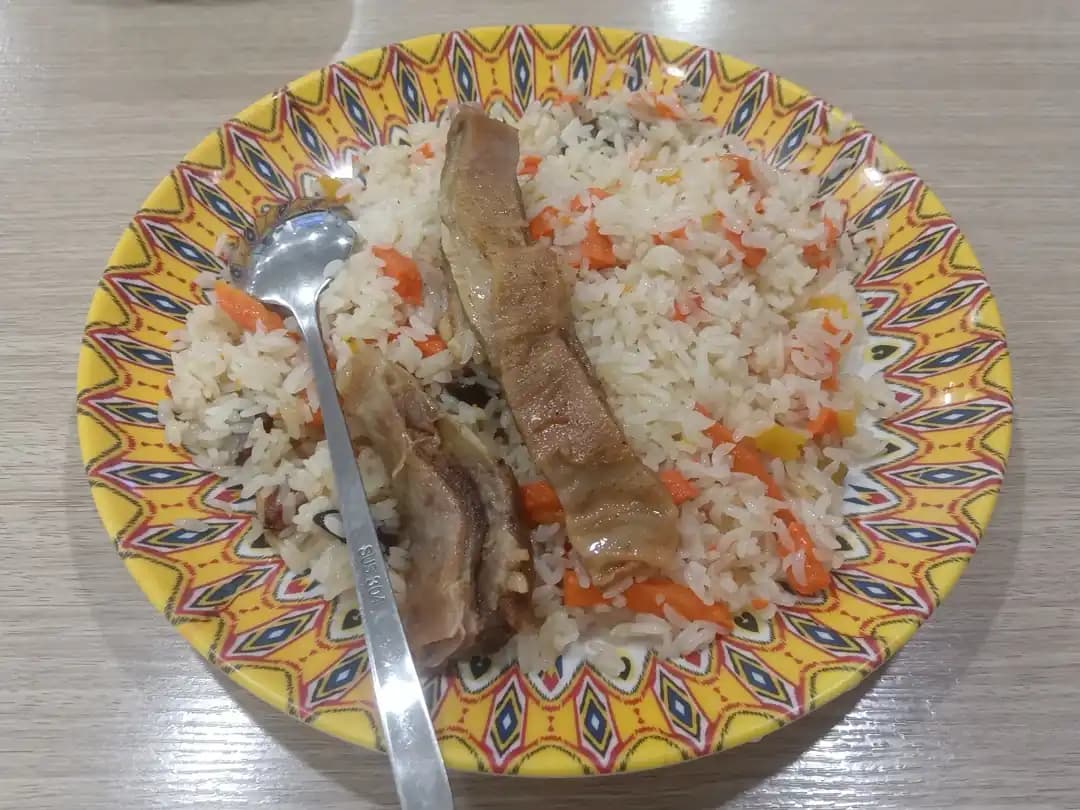
How many calories in plov per 100 grams
On average, classic plov with lamb or beef holds roughly 200–250 kcal per 100 grams. Plov with chicken is noticeably lighter — around 150–190 kcal per 100 grams. The main multipliers are the oil (or tail fat) and the fattiness of the meat: a generous dressing easily adds 100–200 kcal to a serving.
These are ballpark figures, not exact values: every cook has their own recipe, amount of oil and meat, so the real calorie count of your plov can differ significantly.
Plov macro table (approximate)
Approximate values for classic plov with lamb and a moderate amount of oil:
- per 100 g: ≈220 kcal, protein ≈8 g, fat ≈12 g, carbs ≈20 g;
- small serving 200 g: ≈440 kcal;
- standard plate 300 g: ≈650–700 kcal;
- large serving 400 g: ≈850–1000 kcal;
- plov with chicken, same serving — roughly 20–30% lighter.
What affects the calorie count
The main factors that move the number up or down:
- the meat and its fattiness — chicken is lighter than beef, while lamb with tail fat is the most calorie-dense;
- the oil — the more vegetable oil or fat the rice soaks up, the more calorie-dense the plov;
- the rice and its amount — rice provides most of the carbs, so an extra scoop raises the serving's calories;
- add-ins — raisins, chickpeas, garlic and carrots barely change the calories, but extra oil and fatty meat change it a lot;
- portion size — a heaped plate easily turns into 400–500 g.
How to make plov lighter
If you want to cut calories, simple choices help: pick chicken or lean beef instead of fatty lamb, use less oil, add more carrots and vegetables, and serve a more moderate portion.
Home-made plov is almost always lighter than restaurant or street versions: you control the amount of oil and the fattiness of the meat yourself.
How to measure your own serving
Because recipes and portion sizes vary, the most accurate numbers come from your specific plate. Take a photo of your plov in Calvero: the service estimates calories and macros from the picture, and if the meat or size is off, correct it in words ("with chicken", "little oil", "large serving") and the count recalculates.
You can track it in your browser or right inside Telegram. There's a free trial with a few analyses — no card required.
Frequently asked questions
How many calories are in plov per 100 grams?
Classic plov with lamb or beef has about 200–250 kcal per 100 g; with chicken it's lighter, around 150–190 kcal. The main multipliers are the oil (or tail fat) and the fattiness of the meat.
How many calories are in a serving of plov?
A small 200 g portion is about 440 kcal, a standard 300 g plate is roughly 650–700 kcal, and a large 400 g portion is 850–1000 kcal. This is for lamb plov with a moderate amount of oil.
How many calories are in chicken plov?
Chicken plov has about 150–190 kcal per 100 g — roughly 20–30% lighter than lamb or beef, because chicken is leaner. The amount of oil still strongly affects the figure.
How can I make plov less calorific?
Choose chicken or lean beef instead of fatty lamb, use less oil, add more carrot and vegetables, and serve a more modest portion. Homemade plov is almost always lighter than restaurant or street versions.
This content is for informational purposes only and is not medical or dietetic advice. Consult a doctor or a registered dietitian before changing your diet.